
Filament Winding at Carbon Light
Filament winding is a process known for creating hollow structures with remarkable strength. It involves interlacing continuous rovings of materials like carbon fiber, fiberglass, or aramid fiber, within a resin matrix. This method yields products optimized for various applications such as pressure vessels, aerospace components, golf clubs, military armaments, and more, where strength-to-weight ratio and durability are crucial.
Our Solutions for Filament Winding Process
Filament winding creates hollow, strong geometries. With our filament winding technologies, Advanced Composites Inc. manufactures carbon fiber tubing, fiberglass tubes, and other hollow structures. These tubes and structures possess excellent tensile strength, circumferential strength, and strength-to weight ratios.
Because a filament wound tube or other filament wound geometry is hollow, it tends to be extremely lightweight, without sacrificing strength. In many applications, weight is almost as important as strength. For example, aerospace and defense technologies need to be as light as possible while retaining strength, and filament wound composite components can best achieve the target strength-to weight ratios. By creating such lightweight composites, filament winding saves transport and shipping costs as well.
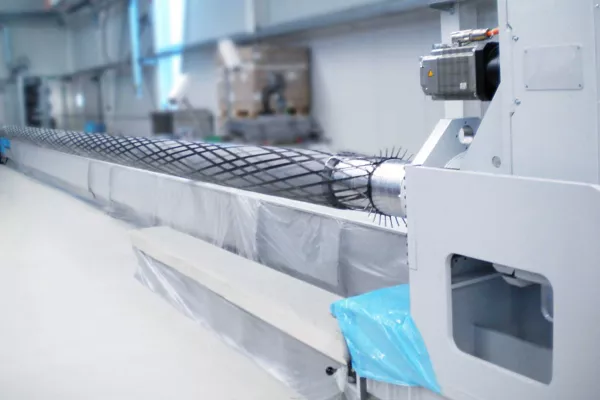
Curing the filament wound composite products
When the layup pattern is completed, the entire assembly—mandrel and composite material layer—is baked to cure. Our computer-controlled ovens cross-link the constituent polymer chains into a continuous three-dimensional network by applying precise heating profiles. This method fixes the composite both chemically and mechanically, causing an irreversible alteration. The curing ovens feature remote monitoring and redundant data acquisition systems for the tracking and documentation of precise curing protocols. The mandrel is removed, leaving the hollow composite structure, once the composite resin has completely dried.
Email Us
- sales@carbonlight.co.in
Call Us
- +91 987 040 7239